 Why You Can Trust CNET
 HTC ThunderBolt (Verizon Wireless) review: HTC ThunderBolt (Verizon Wireless)
HTC ThunderBolt (Verizon Wireless)


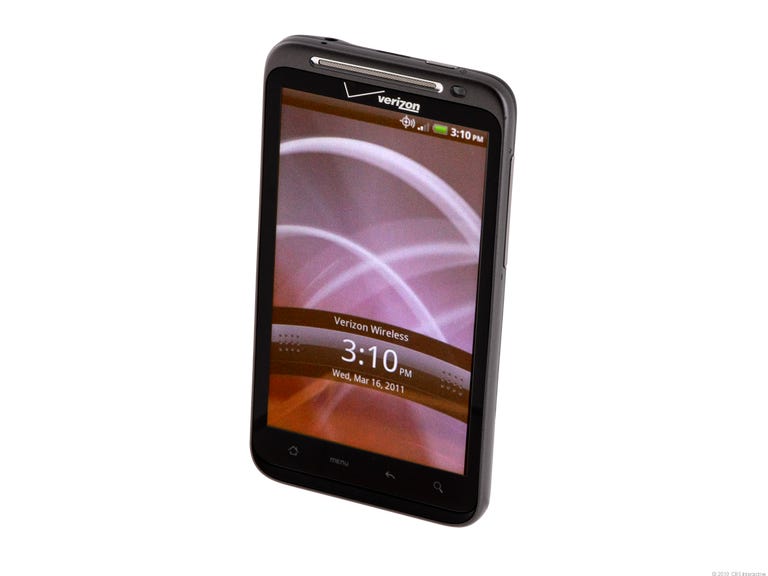
HTC ThunderBolt (Verizon Wireless)
The Good
The Bad
The Bottom Line

Introduced at CES 2011, the HTC ThunderBolt is Verizon's first 4G LTE, and it's finally available for $249.99 with a two-year contract. The Android 2.2 smartphone might not offer the latest and greatest (e.g., dual-core processor), but with the carrier promising average download speeds of 5Mbps to 12Mbps and upload speeds of 2Mbps to 5Mbps, it's no surprise why many are clamoring to get their hands on this device. This includes us, which is why we were so excited to take the HTC ThunderBolt out for a test-drive. The lightning-fast smartphone delivers on many fronts, but it also comes at a cost.
Design
The HTC ThunderBolt is cut from the same cloth as the HTC Evo 4G and the HTC Desire HD, so if you've ever handled those devices, then you have a fairly good idea of what to expect from the ThunderBolt.
At 4.75 inches tall by 2.44 inches wide by 0.56 inch thick and 6.23 ounces, the ThunderBolt isn't for those who prefer dainty devices. The smartphone is large and actually slightly thicker and heavier than the Evo, but it's manageable and the tapered back and soft-touch finish make it comfortable to hold in the hand. As we've come to expect from HTC, the phone is solidly built and has a nice, premium feel to it.

On front, you've got the same 4.3-inch WVGA (800x480 pixels) touch screen as the Evo. There are higher-resolution displays out there, like those on the Motorola Atrix 4G or iPhone 4, but the ThunderBolt's screen still holds up, with clear and bright picture quality. Text was easy to read, and Web pages and video looked lovely on the large screen.
The touch screen is also responsive. Apps launched as we tapped them, and we were able to smoothly navigate through the home screens and menus. The display also features a proximity sensor and built-in accelerometer, which was quick to change screen orientation when we rotated the phone.
The front-facing camera sits right above the screen on the right; below the display are the home, menu, back, and search navigation buttons. Meanwhile, the 8-megapixel camera and flash are located on back, but we really wish there was a dedicated camera button on the phone. Instead, you'll have to use the touch screen to snap photos.
On the bright side, the ThunderBolt has a sturdy kickstand so you can prop the phone on a desk to watch videos, conduct speakerphone calls, and the like. There's a Micro-USB port on the left side, and a volume rocker occupies the right side. Finally, on top of the device, you'll find a power/lock button and 3.5mm headphone jack.

The HTC ThunderBolt comes packaged with an AC adapter, a USB cable, a preinstalled 32GB microSD card, and reference material.
4G features and performance
Before we get to the phone's more-basic features, we thought we'd address the HTC ThunderBolt's whole raison d'etre, and that's 4G support. As mentioned earlier, the ThunderBolt is the first smartphone to work on Verizon's LTE 4G network, which promises average download speeds of 5Mbps to 12Mbps and upload speeds of 2Mbps to 5Mbps.
Given the impressive results we got using Verizon's LG VL600 LTE USB modem, you'd think we'd be a little more prepared for what we experienced on the ThunderBolt, but we were still blown away by what we saw. It's fast. Real fast.
Running Ookla's Speedtest.net app on the handset yielded some erratic and suspicious results (upload speeds were registering up to 39.79Mbps), so we also measured speeds using the phone as a mobile hot spot and as a tethered modem. With the ThunderBolt connected to our MacBook Pro as a mobile hot spot here in New York, we were able to get average download speeds of 7.41Mbps and upload speeds of 6.56Mbps.
By comparison, the HTC Evo 4G from Sprint averaged 3.42Mbps down and 0.93Mpbs up; the Samsung Galaxy S 4G on T-Mobile averaged 4.17Mbps down and 1.68Mbps up; and the HTC Inspire 4G on AT&T averaged 1.75Mbps down and 0.31Mbps up.
We got even better results when we had the ThunderBolt tethered to our Lenovo T61 ThinkPad. We averaged download speeds of 15.58Mbps and upload speeds of 3.44Mbps. (See example speed test below.)

All these numbers translate into great real-world usage. Over a mobile hot-spot connection, we were able to download a 5.1MB MP3 file in 20 seconds and upload a 16.4MB photo album in just 47 seconds. On the ThunderBolt itself, the mobile sites for CNN and ESPN loaded in 3.6 seconds and 4 seconds, respectively, and CNET's full site came up in 12 seconds--one of the fastest times we've seen from a smartphone. Apps downloaded and installed almost instantaneously, and YouTube videos loaded within a couple of seconds and played back without interruption. We were also able to easily stream media from such services as TuneWiki and Bitbop.
Currently, Verizon's 4G network covers 39 markets and more than 60 major airports, and the carrier says it plans to blanket the county with LTE service over the next year and continue to roll out coverage over the next three years, with the hopes of 285 million customers by the end 2013.
The ThunderBolt does a good job of seamlessly switching between 3G and 4G. That said, we do wish that there was a way to toggle between 3G and 4G like the Evo, because as we discuss later, using 4G comes at the cost of battery life.
Currently, Verizon's 4G LTE unlimited data plan costs $29.99 per month. The carrier is also making the mobile hot-spot feature free until May 15. Pricing for the 4G mobile hot-spot service has not been announced by Verizon, unlike previously reported.
Features
The rest of the HTC ThunderBolt's features are pretty much on par with today's higher-end smartphones. As a phone, it offers a speakerphone, conference calling, voice dialing, and text and multimedia messaging. Stereo Bluetooth, Wi-Fi, and GPS are also all onboard. One unique thing about the ThunderBolt compared with Verizon's other smartphones is that it can do simultaneous voice and data over 4G and 3G, thanks to a special chipset in the handset.
The HTC ThunderBolt runs Android 2.2 with the latest version of HTC Sense, which brings such enhancements as new camera tools and a faster boot time (though you have to enable this through the Settings menu on the ThunderBolt). You can read more about the new HTC Sense in our review of the HTC Inspire 4G.
In addition to the standard Google services and support for Microsoft Exchange, POP3 and IMAP accounts, and social network integration, the ThunderBolt comes preloaded with a number of extra apps from HTC and Verizon, including HTC's Peep Twitter client, Footprints, the Bitbop video streaming service, Rock Band, Let's Golf, and TuneWiki, which lets you listen to Internet radio and view music videos with accompanying lyrics, among other things. Some, like TuneWiki, we found useful, but others we could do without and unfortunately, you can't uninstall them.
Also, though the device has a front-facing 1.3-megapixel camera for video calls, there is no preinstalled video chat client, and even worse, there is no indication as to which services are compatible with the device. We downloaded Skype Mobile and Qik, only to find out that both apps aren't currently supported on the smartphone, even though the ThunderBolt's owner's manual has a section on how to use Skype. Tango and Fring appear to be the only clients that work with the ThunderBolt for now.
One piece of good news is that the ThunderBolt offers 8GB of internal memory along with a preinstalled 32GB memory card. Though you don't get the full 40GB of storage, you should still have plenty of room for storing apps, music, videos, and photos.

Speaking of which, the ThunderBolt's 8-megapixel camera does a pretty good job of producing nice-looking images and 720p HD video. The camera offers various editing options, including white-balance controls, exposure settings, ISO, and built-in effects. Even in low-light situations, picture quality was clear and colors were fairly bright. Outdoor shots were vibrant and sharp, and the camcorder also captured clear and nice-looking HD video.
The HTC ThunderBolt offers the usual channels for sharing your photos and videos. The smartphone has DLNA support, so you can wirelessly stream media from your phone to a compatible device, but unlike the Evo 4G, there is no HDMI port.
Performance
We tested the dual-band HTC ThunderBolt in New York using Verizon Wireless service, and call quality was mostly good. On our end, we could understand our callers with no problem, but occasionally there was some hissing in the background and voices could be a bit garbled. Friends had positive things to say about the sound quality and had no major complaints.
HTC ThunderBolt call quality sample Listen now:
Speakerphone quality was OK. Everything was crystal clear on our end, and there was enough volume to continue conversation in a noisier environment. However, we got mixed feedback from our friends; one said it was tinny but he could still understand everything we were saying, whereas another caller said that it was extra echo-y. We successfully paired the ThunderBolt with the Logitech Mobile Traveller Bluetooth headset and the Motorola S9 Bluetooth Active Headphones and were able to make calls and listen to music through the headsets.
The ThunderBolt is powered by a next-gen 1GHz Qualcomm MSM8655 Snapdragon processor and has 768MB RAM. Though some might wait for the dual-core Motorola Droid Bionic, we found the general performance on the ThunderBolt to be just fine. There was minimal lag, and the smartphone never froze or crashed during our review period. We did, however, encounter some software bugs with HTC Sense and Bitbop.
The HTC ThunderBolt ships with a 1,400mAh lithium ion battery with a rated talk time of 6.3 hours and up to 13 days of standby time. For reasons unbeknown to us, the smartphone actually has a smaller battery than the one (1,500mAh) found on the Evo. In our battery drain tests, the ThunderBolt delivered 5 hours of continuous talk time over 4G. In day-to-day usage, the battery life left much to be desired. With moderate usage (some Web browsing, e-mail, phone calls), the ThunderBolt went from a full charge in the morning to about 15 percent in the mid- to late afternoon. However, with heavier 4G usage, we were scrambling for an outlet after 3 to 4 hours, which is pretty bad, to say the least. We'll continue to do more extensive testing over the next few days, but if you plan on purchasing the ThunderBolt, we recommend getting an extra battery.
According to FCC radiation tests, the ThunderBolt has a digital SAR rating of 1.2W/kg and a Hearing Aid Compatibility Rating of M4/T3.
Conclusion
The HTC ThunderBolt is Verizon's fastest and most powerful smartphone yet. The 4G speeds do not disappoint, blowing right past the competition and taking the browsing and streaming experience on a smartphone to the next level. It also serves as a fine hot spot/modem. Couple that with HTC's premium design and a solid feature set and the ThunderBolt looks like a pretty attractive option. However, all of this comes at the expense of battery life, and with more LTE smartphones coming to Verizon in the coming months, including the dual-core Motorola Droid Bionic, it complicates the buying decision. If you have the luxury or the patience to wait, it might be worth sticking around to see how the Droid Bionic and others perform, but for early adopters who crave the speed now, the HTC ThunderBolt can certainly deliver. Just be sure to pick up a spare or extended battery.