Tech Car Buying Guide
Over the last decade, digital technology changed cars substantially. There are a host of new options and other vehicle components to consider when shopping for a new car these days.


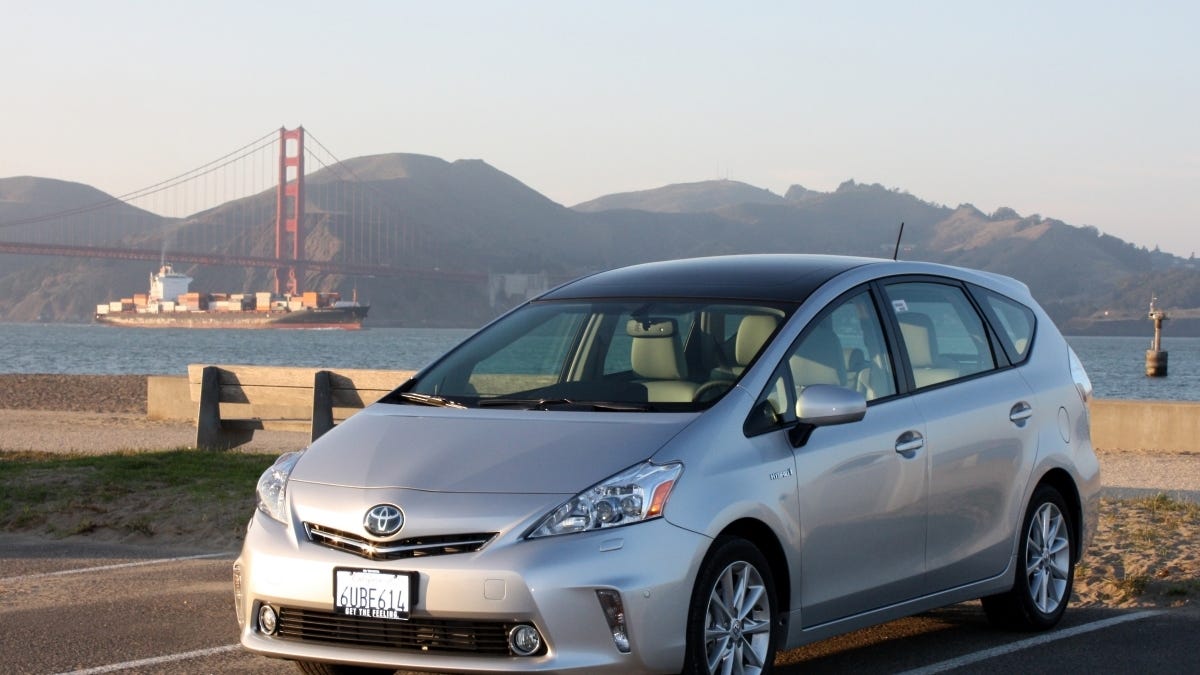
You are probably going to be focused on fuel economy if you are buying a daily driver, so seriously consider a hybrid. Today's hybrid cars get stellar fuel economy with no compromises. Whatever negative anecdotes you have heard about hybrid cars, they are likely myths. If you crash, an EMT will pull you out of the car. You won't have to spend $2,000 replacing the battery pack every five years. And you will spend less on gas, and get the added bonus of replacing your brake pads less frequently than you would in a nonhybrid car.
The most useful cabin electronics are a Bluetooth hands-free phone system and a USB port for digital audio. Pair your phone to the car when you first get it, which is an easy process, and you will never have to touch your phone while driving, as long as you can ignore incoming text messages. If someone calls, you can just touch a button on the steering wheel and start talking.
Most new Bluetooth systems also support Bluetooth audio streaming. With your phone paired to the car, select Bluetooth among the audio sources menu. You will have to select the music on your phone, as this technology is not robust enough yet to use the car's own controls.
USB ports in cars support iPods, iPhones, and USB drives full of music files. These devices store much more music than a CD and are a lot safer to use. Instead of flipping through a case full of CDs while driving your car down the freeway at 65 per, you can either use voice command or a touch screen on the dashboard to select another album. Or just set the stereo to shuffle through the 8GB of music on your device and rock down the road.
Beyond the basics, you can delve a little deeper into different type of fuel-saving technology, digital audio, navigation, and driver assistance systems in the following sections.
Maximum fuel economy
Automakers have introduced a variety of technologies aimed at getting their cars the best fuel efficiency, and that fact represents a win-win. The better a car's fuel economy, the less you pay at the pump and the less carbon dioxide it releases into the atmosphere.
Trust the EPA city and highway numbers. The current calculation to derive these numbers has proven pretty reliable. Your mileage will certainly vary, but the EPA range cited by the manufacturer will give you a good idea of the average fuel economy. Of course, most automakers will highlight the highway figure, which is usually the highest number. Yet highway driving may represent only 50 percent of your time on the road.
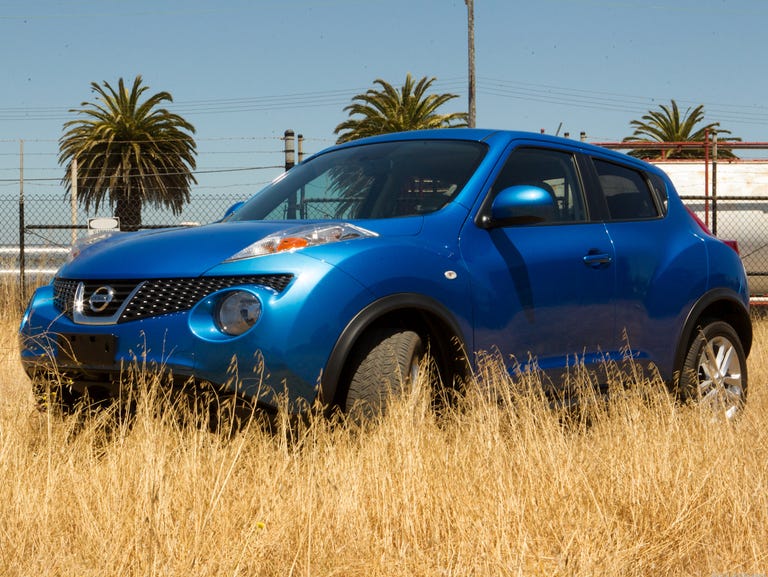
The Nissan Juke uses direct injection and a turbo to wring 188 horsepower from its 1.6-liter engine.
Engines: Although the EPA numbers might tell you everything you need to know, you can delve a little deeper into how engine technology helps efficiency. Variable valve timing, the process of controlling when fuel is sent into a cylinder and when the exhaust is let out, has been in use for some time. Direct injection is a newer technology on the scene, which helps the engine burn the fuel it gets even more efficiently. Right now, there are a growing number of models being offered with direct-injection engines.
Turbos, and sometimes superchargers, are also being used for better fuel efficiency. Turbos consume extra fuel, but they come into play only when you accelerate. Automakers can use smaller, more fuel-efficient engines in cars, relying on the turbo to provide the extra oomph needed for acceleration.
Hybrid gasoline-electric cars can show much greater fuel economy than their gasoline-only counterparts. This efficiency comes from using a parallel electric drive system in the car. This drive system gets its energy by recapturing kinetic energy you lose when braking and storing it in a battery. The stored electricity assists in acceleration and can even power the car at low speeds.
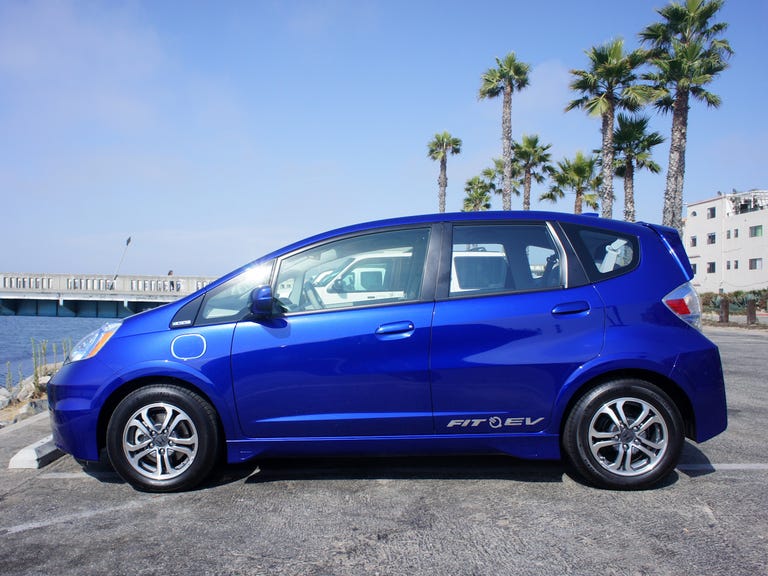
The Honda Fit EV is the latest in a new crop of electric cars.
Plug-in hybrids are also coming onto the market. These work just like normal hybrid cars, but also let you add more electricity to the batteries from the grid. These cars typically have larger battery packs than standard hybrids, and can drive greater distances on pure electricity.
There are a few electric cars hitting the market in small volumes. The state of current battery technology means these cars typically have a range of about a 100 miles and can take hours to recharge. However, these cars use energy much more efficiently than internal combustion engine cars, and electricity costs about a tenth of what gasoline does per mile. If you live within 50 miles of your work, and most of your driving is a commute, an electric car can save you a lot of running costs.
When evaluating an electric car, also look at the telematics features. Most electric cars have an on-board data connection that lets you see the battery status and set charging times remotely, using a smartphone app.
Transmissions: The take rate on manual transmissions these days is only about 6 percent in the U.S., and people buying them tend to be enthusiasts who already know a lot about cars, so let's leave that aside. Transmissions that shift automatically come in a variety of flavors. There is the torque converter automatic, the type that has been used in cars for more than 50 years. Continuously variable transmissions (CVT) either use a pulley system or a planetary gearset to constantly change drive ratios, seeking out the best for efficiency and power. Finally, the latest type of transmission is the dual clutch. Based on manual transmission technology, a dual-clutch transmission uses a computer and servos to select gears and engage and disengage the clutches, instead of requiring the driver to push a clutch pedal.
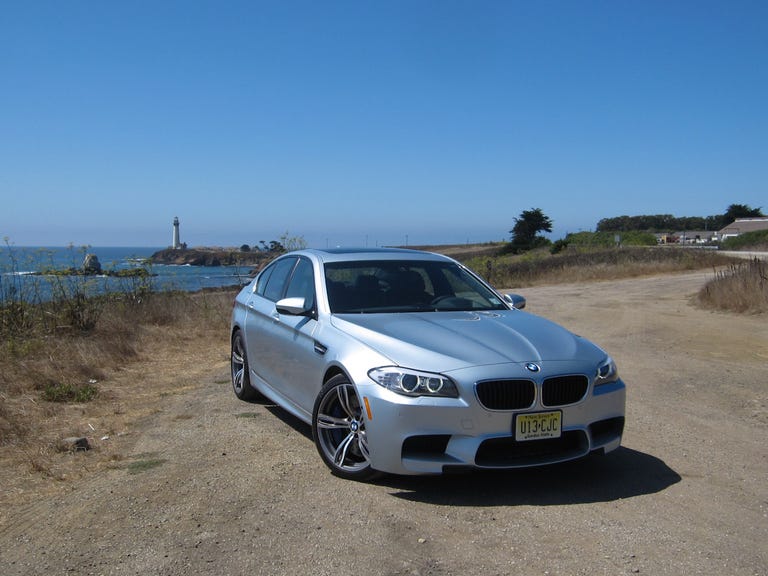
The BMW M5 uses a dual-clutch transmission with seven gears, delivering lightning-fast, satisfying gear changes.
When shopping for cars with the standard type of automatic transmission, look up how many gears it has. These days, there should at least be six. And there are many cars with seven-, eight-, and now even nine-gear transmissions. Generally, the more gears the better, as the car has more drive ratios to choose from for efficiency and power.
Automatic transmissions may also include a manual gear selection mode. With the shifter or paddles on the steering wheel, you can flick through the gears sequentially, for example dropping down from fifth to fourth to third. Gear selection comes in handy on long hill descents or at times when you need to get more power going to the wheels. Short of manual selection, transmissions can have different low-range settings, which keep the transmission from shifting into its higher gear sets.
CVTs often show better fuel economy than a typical automatic transmission due to a greater number of gear ratios. They tend to accelerate more smoothly, as well, because the car is not jumping from gear to gear. However, CVTs can also induce unexpected sounds from the engine, letting it wind up in manner that seems out of step with the way you are applying acceleration. Nissan has done excellent work developing its CVTs, giving them low ranges and even virtual shift points, letting the driver sequentially select gears just as they might do with a standard automatic transmission.
Dual-clutch transmissions were originally developed for performance cars, but are finding their way into production cars as a means of getting the fuel economy of a manual transmission and the convenience of an automatic. When test-driving a car with a dual clutch, leave it in automatic shift mode and look for moments when its programming slips, usually shifting down too late and leaving you with no power for a merge or passing. These transmissions are still being refined, so some may show this type of problem.
More fuel-efficiency tech: Automakers are using a number of other methods to increase fuel economy. Just about every new car has an electric power steering system rather than the hydraulically boosted systems that tapped power from the engine. Some cars are coming out with idle-stop systems that will actually turn the engine off when you come to a stop at a traffic light or sign. Idle-stop is most efficient with bigger engines, but actually works better with small, four-cylinder engines that take less effort to start up.
Infotainment on the road
Information and entertainment: one is useful to have on the road and the other adds to the enjoyment of our cars. There are a lot of cabin electronics available today that come under these categories, but two are extremely convenient. A Bluetooth hands-free phone system lets you receive calls while driving without ever having to take your hands off the steering wheel or move your eyes from the road. Of less importance is a USB port for the stereo, which lets you plug in a USB drive full of music or an iPod, and never have to fiddle with a bunch of CDs while driving. After these features, a good navigation system keeps you from getting lost and, more importantly, shows the locations of traffic jams.
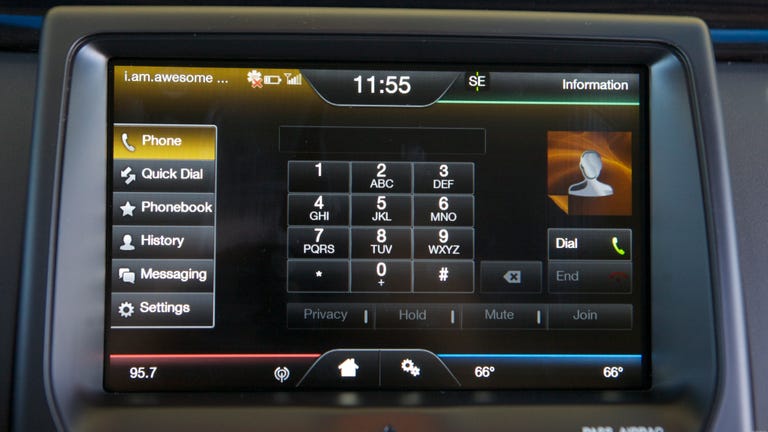
The Ford Flex lets you manually dial or select contacts from the touch screen and through voice command.
Hands-free calling: Pair your phone with a Bluetooth phone system in the car, and your calls will come through the car's audio system. Many states now have laws against drivers holding a phone, so a Bluetooth phone system is essential. When looking at a car with Bluetooth, check to see if it includes a voice-command system and steering wheel buttons to activate it. These features help keep your hands on the wheel and eyes on the road.
Another feature to look for is contact list integration. When you pair your phone with the car's hands-free system, it should download your phone's contact list to the car. The voice command system should then let you tell it to call anyone from the contact list, automatically matching the name to the phone number, and placing the call. Some cars will also have touch screens that let you see the contact list, and place a call by touching a listing. Most cars these days support contact list integration with voice command.
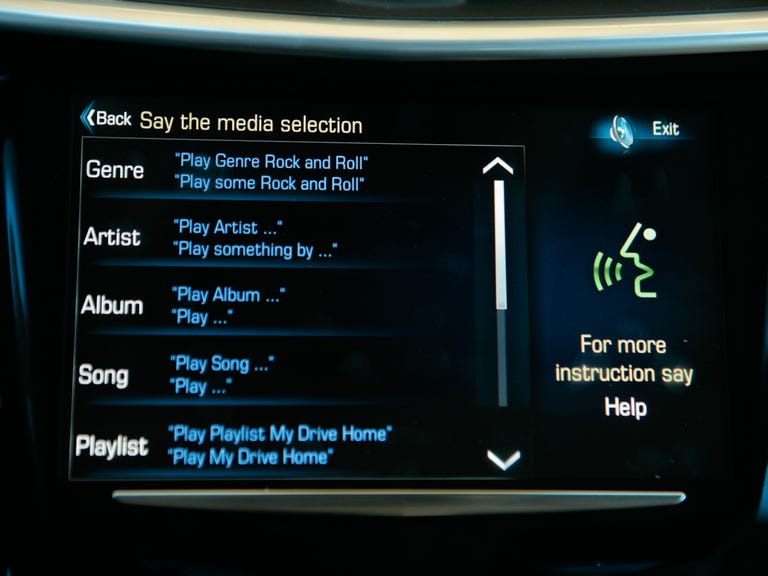
The Cadillac XTS lets you ask for music from your digital audio sources by name.
Digital audio: Along with a Bluetooth hands-free phone system, many cars also support Bluetooth audio streaming through the stereo. You can play music from your phone through the car's stereo. The drawback is that you will have to start the music playback on your phone, as voice command systems and car touch screens do not yet offer much control over this feature. With most cars that support this feature, it is easiest to set your phone's music player to shuffle all songs, then whenever you get in the car it will automatically start playback.
Many cars these days come with USB ports for the stereo, which let you plug in a USB drive or an iPod full of digital audio tracks. When looking at a car with a USB port, see if you can use voice command to request music by album, artist, or song title. Otherwise, the car should have an LCD and controls that let you browse the music library on the iPod or USB drive. Make sure the controls are easy to use and the display is intuitive.
Other digital audio sources that can be nice to have include satellite radio and HD radio receivers, SD card slots, and even hard drives built into the car where you can store a music library.
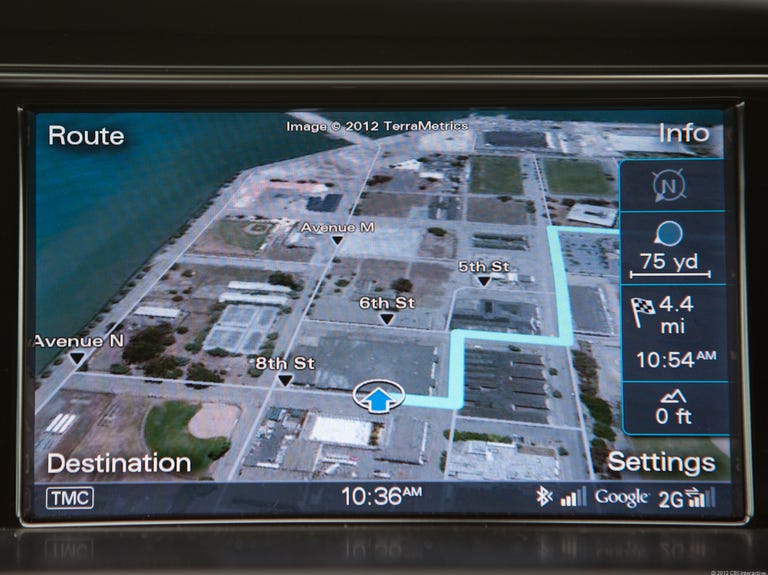
The Audi S5 has the most advanced navigation system available, integrating Google Earth imagery.
Navigation systems: A built-in navigation system can not only guide you to a destination, but alert you about traffic jams, which is very useful on a daily basis. Navigation is a pricey option on most cars, so you want to make sure it will meet your needs. When test-driving a car with navigation, watch the map when you turn on the car. Does it quickly find your location and render the map? Make sure it accurately keeps track of the car's location as you drive.
Traffic data is one of the killer features of navigation systems, as these can alert you to that overturned big rig on the freeway before you set out for the office. The best systems will look at the traffic on your route, then dynamically program in an alternate route if there is trouble ahead. Some will pop up an alert and ask if you want to change the route. With most of these systems, you will need to set your home or office as a destination, even though you know how to get there, to get traffic warnings. Traffic data is limited by the reporting mechanism, so you might end up in a traffic jam caused by an accident that just happened.
Other useful features to look for in modern navigation systems are gas prices and online destination look-up. Some navigation systems can show you a list of nearby gas stations with their per gallon gas prices, letting you find the cheapest gas. Another feature being quickly adopted is the capability to look up destinations through Google or another online service. These features let you search for a business name or category through a data connection in the car, returning a list of local businesses that match what you are looking for.
Connected features: Many new cars are getting an onboard data connection or some means of bringing data into the car through a driver's smartphone. A data connection enables many services, from destination search to online music. The most useful is Internet-based local search, which integrates with the car's navigation system. After typing in or speaking a search word, the car shows a list of nearby business that match the word, usually garnered from Bing or Google. You can select a result and set it as the car's destination. Other useful navigation-related connected features come in the form of app such as Yelp and OpenTable.
Pandora is the most popular connected music service, and many cars integrate it. Typically, you can see the Pandora interface on the car's LCD, select stations, and give the currently playing song a thumbs up or thumbs down. Internet-based radio, such as TuneIn, is another popular feature. This service lets you listen to any radio station from around the world, as long as it has an Internet stream, which most do these days.
Crash prevention
Cars are getting smarter, using cameras, radar, and sensors to become aware of their surroundings. This is a good thing, as the car can alert you to obstacles or other cars you might be about to hit. No matter how good a driver you are, no matter how constantly alert, you cannot see 360 degrees, nor can you see parts of the road hidden by your car. A variety of systems will help prevent fender benders and could save your life.
Rear-view camera: The most basic of driver assistance systems and the one most widely adopted, a rear-view camera shows what is behind you on a display in your car. Most importantly, these cameras show what your rear-view mirror can't, such as a child directly behind the car. When buying a car with a rear-view camera, make sure you can see your rear bumper in the display. Another nice feature is a trajectory line, a line drawn on the display which shows where your car will go depending on how the wheels are turned.
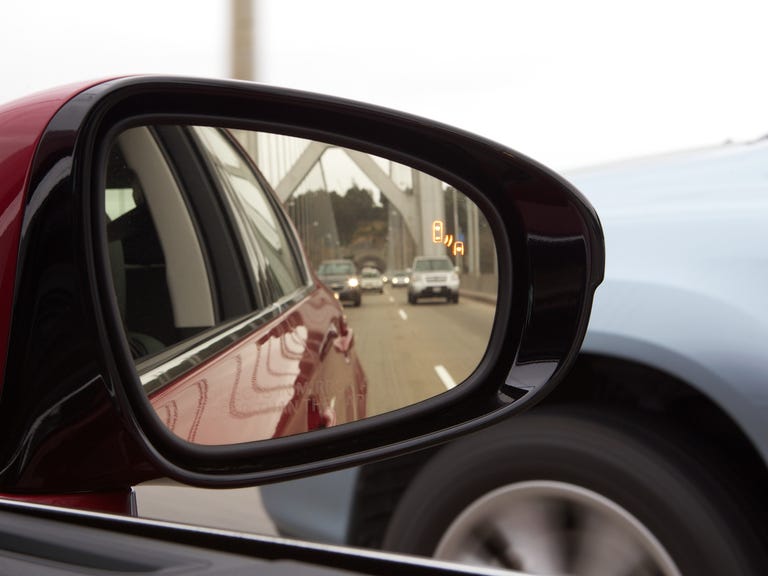
The Lexus GS 450h lights up an icon in its side mirror when another car is in the blind spot.
Blind-spot monitor: One of the most useful driver assistance systems, blind-spot monitors use radar or other technology to watch the lanes to either side of your car. If another car is in that lane and hidden by your own car's cabin structure, a warning light will turn on somewhere in or near your car's side-view mirror, on the side where the other car is traveling. These systems will often flash that warning light if you hit your turn signal to go into that lane, giving you an extra warning.
There are many other driver-assistance systems available, from adaptive cruise control, which slows your car down to match the speeds of slower cars ahead, to automatic parking systems, which take much of the stress out of parallel parking. These features tend to come in expensive option packages, but they might prevent even more expensive repairs.