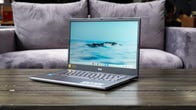
Toshiba Tecra M2-S630 (Pentium M 1.7 GHz, 512 MB RAM, 60 GB HDD)
Pricing not available
CNET Editors' Review
The good: Long-lasting battery; small and easy to carry; swappable media bay; Wi-Fi and Bluetooth standard.
The bad: Sticky touchpad; sagging keyboard.
The bottom line: For business travelers, the Tecra M2 is easy to carry and convenient to use, but newer thin-and-lights outpace it.
It's a solid business laptop; in CNET Labs' tests, the Tecra M2 performed on a par with other 1.7GHz Pentium M systems. But it's not quite as fast or as long-lasting as the latest ... Expand full review
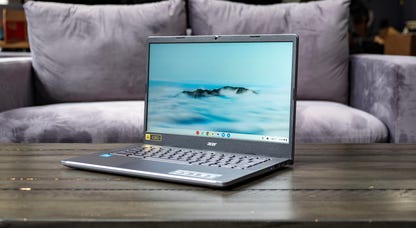
It's a solid business laptop; in CNET Labs' tests, the Tecra M2 performed on a par with other 1.7GHz Pentium M systems. But it's not quite as fast or as long-lasting as the latest Dothan laptops, so if speed is your game, get the HP Compaq nc6000.The silver-and-black Toshiba Tecra M2 fits easily in your briefcase because it's a bit smaller than most thin-and-lights. It measures 12.25 inches wide by 10.25 inches deep and slightly less than 1.5 inches thick, and it weighs just shy of 5 pounds. (The AC adapter adds 1 pound.) If battery life matters more than traveling light, you can bring along a spare battery. A double-size battery that fits in the battery slot costs $169 and weighs 1.4 pounds. Or you can buy a 12-ounce battery (also $169) that fits in the Tecra M2's optical drive bay.
Mobile application performance (Longer bars indicate faster performance)
Find out more about how we test notebooks. System configurations: Fujitsu LifeBook S series Windows XP Professional; 1.7GHz Intel Pentium M; 512MB DDR SDRAM 266MHz; Intel 855GM (up to 64MB shared); Toshiba MK6021GAS 60GB 4,200rpm HP Pavilion zt3000 Windows XP Home; 1.7GHz Intel Pentium M; 512MB DDR SDRAM 333MHz; ATI Mobility Radeon 9200 64MB; Fujitsu MHT2080AT 80GB 4,200rpm Toshiba Tecra M2 Windows XP Professional; 1.7GHz Intel Pentium M; 512MB DDR SDRAM 333MHz; Nvidia GeForce FX Go 5200 64MB; Hitachi Travelstar HTS548060-M9AT00 60GB 5,400rpmIn this small test group, the Toshiba Tecra M2's battery life finished on top. The M2's 10.8V, 4,000mAh (48WHr) battery lasted more than four hours. The HP Pavilion zt3000 finished second, with its 14.8V, 4,000mAh (65.12WHr) battery lasting more than three hours. Although the HP Pavilion zt3000's battery is more powerful, the system has a much higher screen resolution than that of the Toshiba Tecra M2. This likely helped the Toshiba Tecra M2 come out on top, since the more pixels a screen has, the more power it takes. The Fujitsu LifeBook S series brought up the rear, with its 10.8V, 4,000mAh (43WHr) battery powering it for about three and a half hours. The Toshiba Tecra M2 offers great battery life for your mobile business and content-creation needs. Battery life (Longer bars indicate longer battery life)
To measure mobile application performance and battery life, CNET Labs uses BAPCo's MobileMark 2002. MobileMark measures application performance and battery life concurrently, using a number of popular applications (Microsoft Word 2002, Microsoft Excel 2002, Microsoft PowerPoint 2002, Microsoft Outlook 2002, Netscape Communicator 6.0, WinZip Computing WinZip 8.0, McAfee VirusScan 5.13, Adobe Photoshop 6.0.1, and Macromedia Flash 5.0). System configurations: Fujitsu LifeBook S series Windows XP Professional; 1.7GHz Intel Pentium M; 512MB DDR SDRAM 266MHz; Intel 855GM (up to 64MB shared); Toshiba MK6021GAS 60GB 4,200rpm HP Pavilion zt3000 Windows XP Home; 1.7GHz Intel Pentium M; 512MB DDR SDRAM 333MHz; ATI Mobility Radeon 9200 64MB; Fujitsu MHT2080AT 80GB 4,200rpm Toshiba Tecra M2 Windows XP Professional; 1.7GHz Intel Pentium M; 512MB DDR SDRAM 333MHz; Nvidia GeForce FX Go 5200 64MB; Hitachi Travelstar HTS548060-M9AT00 60GB 5,400rpmToshiba doesn't skimp on support for the M2. The basic package provides three years of warranty with prepaid shipping and 24/7 toll-free tech support. When the warranty is over, support calls run a steep $35 each, but the company's Web site provides e-mail tech support and extensive do-it-yourself information. The notebook also comes with a great 250-page onscreen manual. The company's policy with regard to screen defects, however, strikes CNET as providing more wiggle room for Toshiba than reassurance to customers. Bad displays can have between 10 and 18 defective pixels before Toshiba considers replacing the screen, and the vague policy also says, "In some cases the nonconforming pixel limits may be waived, depending on the grouping and/or placement of the nonconforming pixels." To find out more about how this product's warranty really stacks up and what you should look for in terms of service and support, take a look at CNET's hardware warranty explainer. Hide Review Compare to other sCompare selectedUser ReviewsSee all user reviewsMost recent user reviewsShowing 3 of 16 reviews stars "Toshiba junk - video/LCD display problem - catch 22" By stu593Pros: Lightweight Cons: nVidea card crashes system - no fix, after 2 year wait Summary: I bought this computer convinced that I was buying quality based on previous experience with Toshiba. Well, never again will ANY Toshiba product enter my home. I became aware of a problem within the first month of using it when I tried to play a video on an LCD projector ... Expand full review stars "Bad experience to start and just downhill from there!" By scoobinskiPros: Screen, touchpad. Cons: Battery, reliability and service Summary: Laptop delivered had a fatal hardware problem, and had to return it for a new computer. The new one had problem after problem. The hard drive became corrupted after 12 months. The transformer fused. The DVD drive failed after 14 months. The speakers had a poor connection, and would only ... Expand full review Where to BuyPricing not available Where to BuyPricing not available Which laptop is right for me?
While a laptop has become a ubiquitous accessory for modern life, the actual process of choosing the right model can take some serious time and research. In this guide, we'll outline the different categories of laptops and which types are best for different users. We'll also take a look at CPU, hard-drive, and networking options. We've compiled a handful of typical user experiences that should help outline what type of laptop is right for you. Chances are, you'll fall somewhere in between two or more of these archetypes, so carefully consider what you'll be using your new laptop for. |